



Sun Protection That Actually Gets Used: A Guide to Smarter SPF
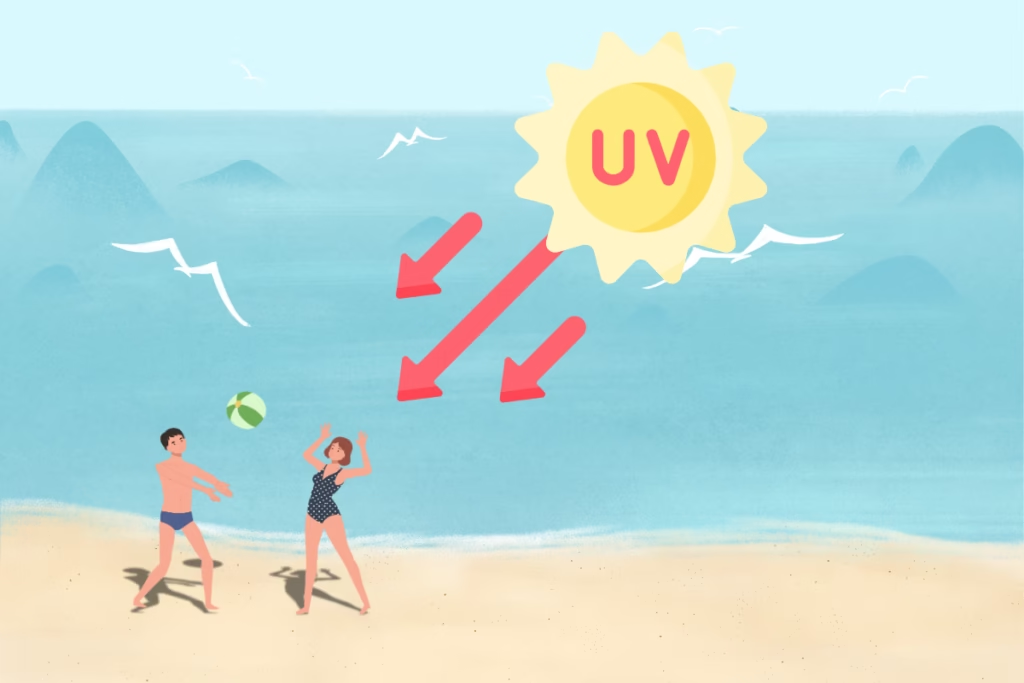
JUNE 20, 2026 || Summer arrives differently in the Northeast than it does elsewhere. It doesn’t ease in gradually; it tips over a threshold, and suddenly the shore is crowded, the pools are open, and people are spending real, sustained time outdoors. For most people, that seasonal shift happens without much thought about how it changes their skin’s exposure to ultraviolet radiation. Incidental UV exposure accumulates year-round through driving, walking, and sitting near windows, but summer amplifies it considerably. Long days at the beach, afternoons on the golf course, weekends at the pool: these are hours of direct sun exposure that add up faster than most people expect.
How UV radiation damages skin
Ultraviolet radiation doesn’t just cause sunburn. It penetrates the skin’s outer layers and directly damages DNA at the cellular level. Over time, that damage triggers a cascade of changes: chronic inflammation, accelerated collagen breakdown, uneven pigmentation, and the gradual loss of skin texture and elasticity that we associate with premature aging. More seriously, cumulative UV exposure is one of the leading risk factors for skin cancer, including melanoma, the most aggressive and potentially life-threatening form. UVB rays are the primary driver of visible sunburn, while UVA rays penetrate more deeply and are strongly linked to photoaging and DNA damage. Both are present throughout the day and across all seasons, which is why broad-spectrum protection matters regardless of how intense the sun feels.
Understanding SPF
SPF, or Sun Protection Factor, tells you how much longer you can stay in the sun before UVB rays cause a sunburn compared to unprotected skin. The math is straightforward: if your unprotected skin would start to burn in 10 minutes, an SPF 30 sunscreen theoretically extends that to 300 minutes.
To calculate the percentage of UVB rays blocked, divide the SPF number by 100 and subtract from 1, or more simply:
- SPF 30 blocks 1 – (100/30) = 97% of UVB rays.
- SPF 50 blocks 1 – (100/50) = 98% of UVB rays, and
- SPF 100 blocks 1 – (100/100) = 99% of UVB rays.
The differences at the high end are smaller than the numbers suggest, which is why consistent reapplication matters more than chasing the highest SPF on the shelf. No sunscreen blocks 100% of UV radiation, and all sunscreens require reapplication every two hours, or immediately after swimming or heavy sweating, to maintain that protection.
Why daily use matters more than occasional use
One of the most common misconceptions about sunscreen is that it’s a situational product, something you reach for at the beach or during a vacation. In reality, the protection that matters most is the kind that happens every day without thinking about it. Incidental UV exposure from a morning commute, a walk at lunch, or an hour of errands is low-intensity but relentless, and it compounds over years into the same collagen loss, pigmentation changes, and cancer risk that accumulate from more dramatic sun exposure. Consistent daily use is far more protective over a lifetime than heavy, occasional application.
Cloudy days are where people get caught off guard
Overcast conditions give many people a false sense of safety, and that’s precisely when unexpected sunburns happen. Without direct heat on the skin, it’s easy to underestimate how much time you’re spending outside, skip reapplication, or decide sunscreen isn’t necessary. The problem is that UV rays aren’t blocked by clouds the way heat and visible light are. A fully overcast day can still deliver significant UV exposure, enough to cause real damage before you feel it.
Mineral versus chemical sunscreen
The two main categories of sunscreen work through fundamentally different mechanisms. Mineral sunscreens (those containing zinc oxide or titanium dioxide) sit on the surface of the skin and work by physically scattering and reflecting UV radiation. They’re effective immediately upon application, tend to be well-tolerated by sensitive and post-procedure skin, and don’t rely on chemical absorption. Chemical sunscreens, by contrast, contain organic filter compounds that absorb UV radiation and release it as heat. They typically feel lighter on the skin, blend more invisibly, and are easier to layer under or over makeup.
The traditional criticism of mineral sunscreens is legitimate: drugstore-grade formulas can leave a chalky white cast, feel heavy, and blend unevenly, which makes them easy to avoid or use inconsistently. Higher-end mineral formulations address this directly. The products Atrium carries are engineered to blend seamlessly, feel lightweight, and finish cleanly, removing the cosmetic barriers that cause people to skip mineral protection altogether.
Tinted sunscreens as a daily wear solution
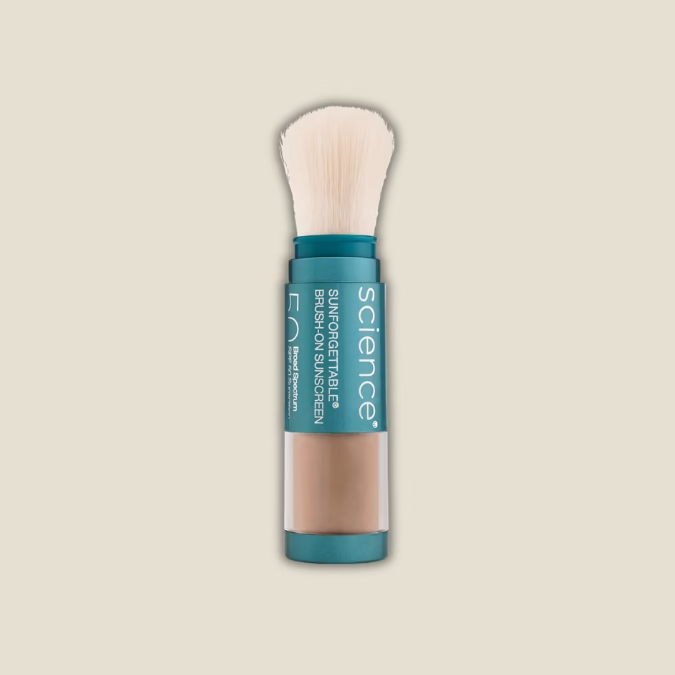
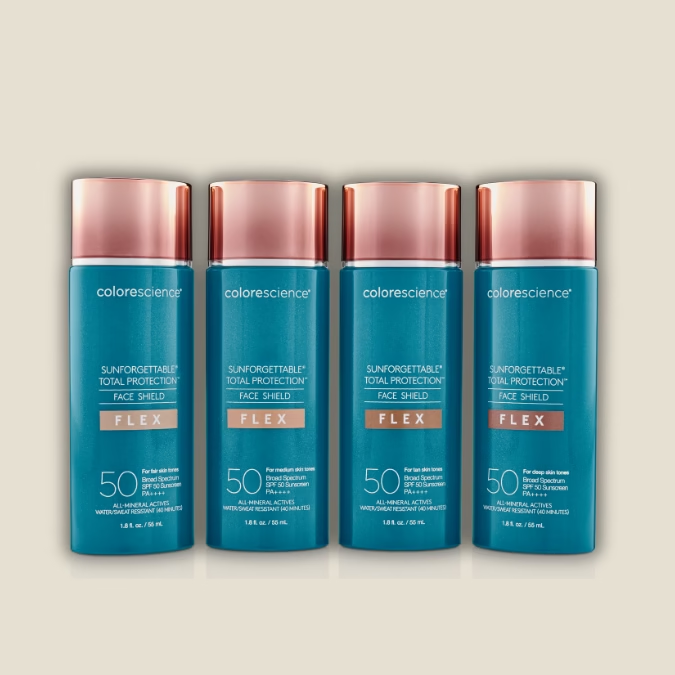
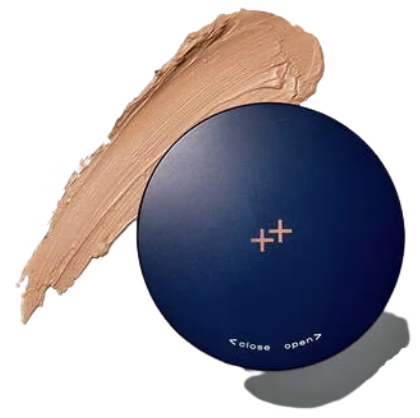
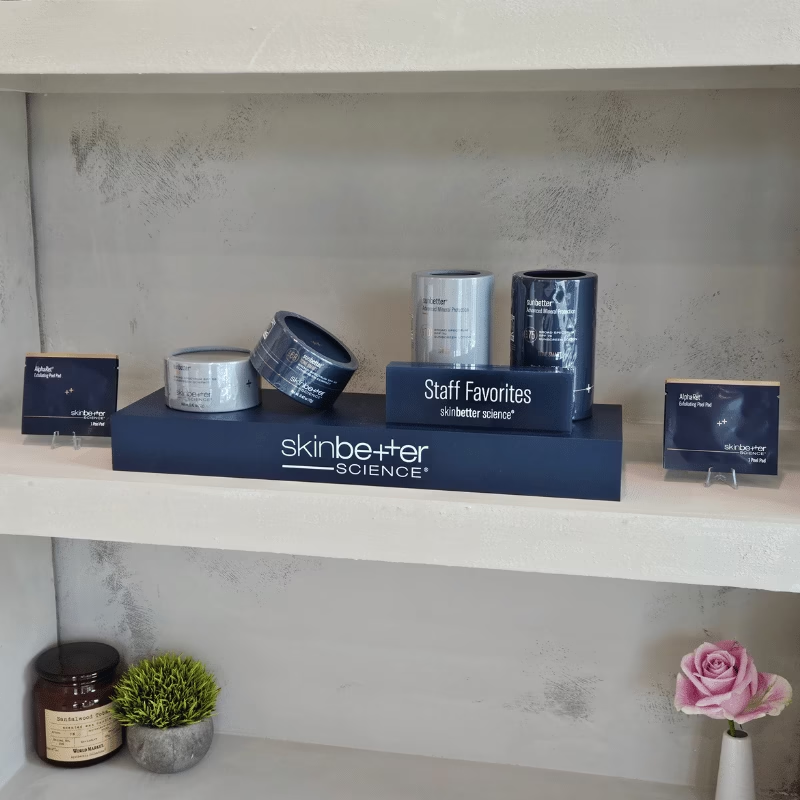
For people who want their sunscreen to do a little more than protect, tinted formulas offer an elegant solution. A good tinted sunscreen evens out skin tone, reduces the appearance of the white cast that mineral filters can leave, and adds enough cosmetic finish that it can replace a light foundation or tinted moisturizer for everyday wear. It simplifies the morning routine without sacrificing either protection or appearance. Both Skinbetter Tone Smart and Colorescience, carried at Atrium, offer tinted options that are sophisticated enough to wear as a standalone complexion product while still delivering serious broad-spectrum SPF. For those who struggle to make sunscreen a daily habit, finding a formula that feels like a cosmetic upgrade rather than a clinical chore is often what finally makes the difference.
Written by Atrium Medspa Editorial Team & medically reviewed for accuracy by Michael Klein, MD, FACS. This content is intended solely for general education and should not be interpreted as medical advice or a recommendation for any specific treatment, medication, or procedure. No physician-patient relationship is created by your use of this content. Healthcare decisions should be made in consultation with a qualified licensed clinician who can evaluate your individual history, symptoms, risks, and goals. If you are experiencing a medical emergency, call 911 or seek immediate emergency care.