



Big Results, Minimal Downtime? Here’s the Tradeoff.
JUNE 16, 2026 || One of the first questions patients ask about any aesthetic treatment is, “How much downtime is there?” For those unfamiliar with the term, downtime is the period after a treatment when you may have visible side effects or temporary restrictions before you look and feel back to normal. Sometimes, it requires real recovery, while at others, it’s just cosmetic (sometimes referred to as social downtime).
The downtime question is a good one, as most of us have to get back to our daily lives — we interact with others at home, at work, and in our social lives, and don’t want to scare anyone off, or answer too many questions of the “what happened?” variety. But the next question should really be, “What kind of result am I hoping for?”
In aesthetics, downtime and results are often connected. That doesn’t mean more downtime is always better, and it definitely doesn’t mean everyone should choose the most aggressive treatment available. It just means that if a treatment causes very little disruption to daily life, you usually shouldn’t expect dramatic overnight change. Low-downtime treatments can be excellent — but they’re not magic.
The real point is that every procedure has its place. Some are great because they’re subtle, quick, and easy to fit into a normal week. Others ask more of you upfront in exchange for stronger, faster, or more structural improvement. The goal isn’t to avoid downtime at all costs. It’s to choose the right tradeoff for your goals.
The Wrinkle Treatment Downtime Spectrum
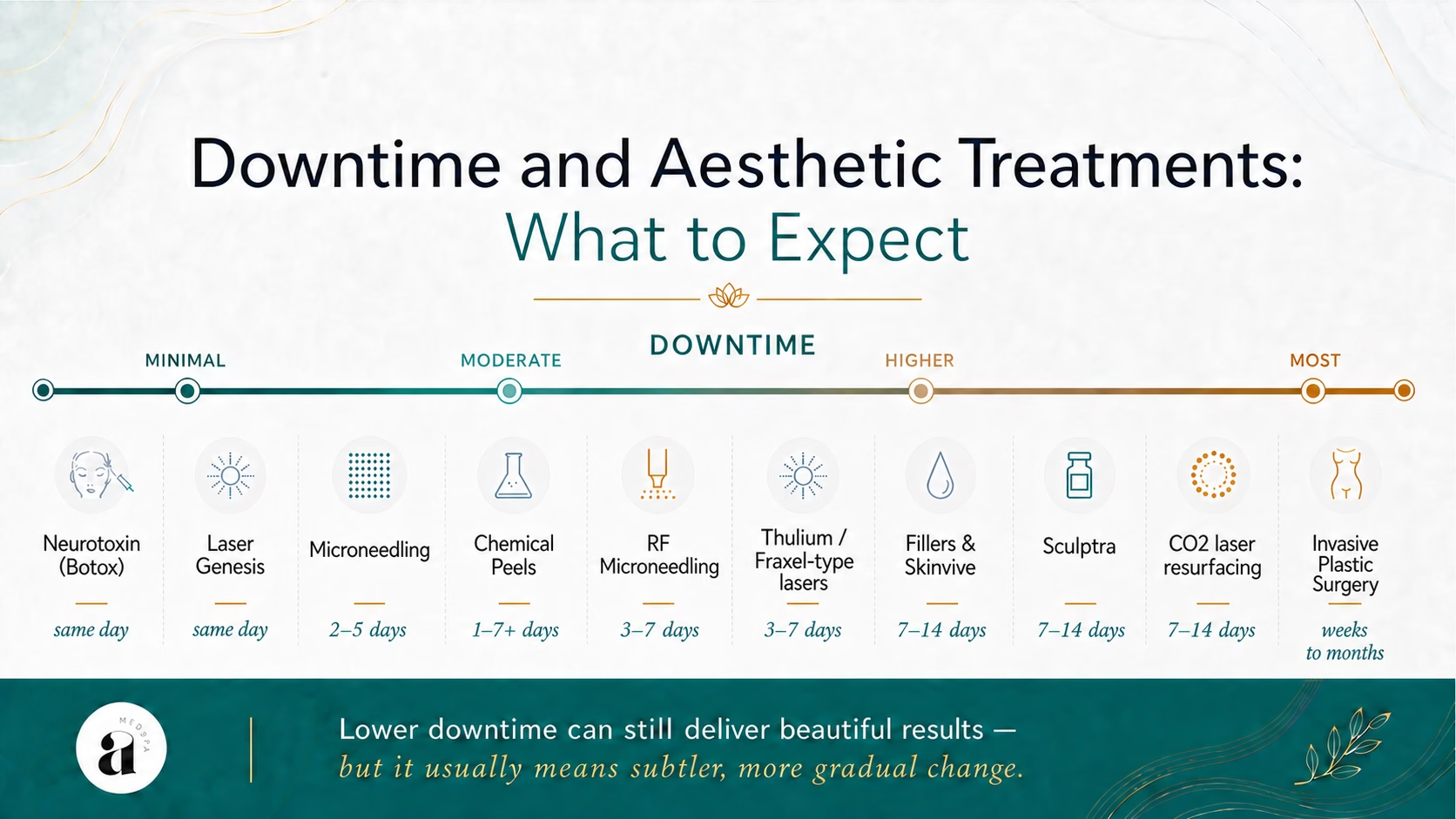
When it comes to wrinkles and overall facial rejuvenation, treatments usually fall along a spectrum from least downtime to most downtime. At the lower end are neurotoxins like Botox, then fillers and skin boosters like Skinvive, then biostimulants like Sculptra, then chemical peels, then laser treatments ranging from very gentle to fully ablative, then microneedling and RF microneedling, and finally invasive plastic surgery.
None of these treatments is “best” in every situation; they’re just different tools. Some help with muscle-driven wrinkles. Some restore volume. Some improve hydration and skin quality. Some stimulate collagen. Some resurface the skin. And some physically lift or reposition tissue. The best treatment depends on what you’re trying to improve, how quickly you want to see change, and how much recovery you’re comfortable with.
Neurotoxin: Lowest Downtime, Great for Dynamic Wrinkles
Neurotoxins like Botox are among the easiest aesthetic procedures to fit into daily life. They’re especially effective for dynamic wrinkles — the lines caused by repeated muscle movement — like forehead lines, crow’s feet, and frown lines.
There’s usually little to no real downtime. Most patients may have mild redness, tiny bumps at the injection sites, or the occasional bruise, but these are usually brief and don’t stop normal activity. The limitation is that neurotoxins don’t do everything. They’re excellent for expression lines, but they don’t replace lost volume, improve skin texture, or tighten loose skin.
Fillers and Skin Boosters: Low Downtime, Faster Visible Payoff
Fillers and skin boosters (like Skinvive) sit just above neurotoxin on the downtime scale of aesthetic procedures. They can restore volume, soften folds, improve contour, refine facial balance, and enhance hydration and smoothness.
While these procedures typically have very little “social” downtime (time spent away from social activities due to one’s appearance), most patients should expect anywhere from 1 to 5 days of mild swelling, and bruising can sometimes last closer to 5 to 7 days depending on the area treated and the individual. That’s still considered low downtime overall. The appeal here is that results can often be seen quickly. But again, they’re not magic — they won’t tighten significant laxity or resurface the skin the way more corrective treatments can.
Sculptra: Minimal Social Downtime, Gradual Improvement
Sculptra deserves its own category because it behaves differently from filler. Instead of simply adding volume where it’s placed, it stimulates collagen over time, which makes it a great option for patients who want gradual, natural-looking rejuvenation.
The visible downtime is usually still manageable. Mild swelling, tenderness, or bruising may last a few days, and temporary fullness right after treatment is common. Bruising sometimes can be significantly more noticeable than with fillers. But the bigger thing to understand about Sculptra isn’t the recovery — it’s the timeline. This is a treatment that asks for patience. As an aesthetic procedure, it can be incredibly effective, but it builds gradually rather than giving you an instant dramatic change.
Chemical Peels: Often Underestimated, Still Very Effective Aesthetic Procedures
Chemical peels are sometimes overlooked because they’ve been around for so long, but they still deserve a place in this conversation. They can be excellent for dullness, uneven tone, acne, fine textural issues, and certain early signs of photoaging.
Downtime depends heavily on the depth of the peel. A lighter peel — like the ones we prefer to use at Atrium — may involve just 1 to 3 days of mild dryness, tightness, or flaking, while a stronger peel may create 5 to 7 days or more of visible peeling and redness. That’s what makes peels a great example of the downtime-results relationship: the more corrective the treatment, the more recovery you should expect. Even so, peels remain an effective and time-tested option in the right patient.
Lasers: A Wide Range of Downtime and Results
Lasers really need to be thought of as a spectrum, because “laser treatment” can mean very different things. Some lasers involve almost no downtime and are meant to gently stimulate collagen or reduce redness. Others are much more corrective and come with noticeably more recovery.
At the gentlest end are non-ablative treatments like Laser Facials (sometimes referred to as Laser Genesis). This is one of the easiest laser treatments to recover from. Most patients have anywhere from essentially no downtime to about 2 to 6 hours of mild pinkness or flushing (similar to a mild sunburn), and many go right back to work or normal activities the same day. That convenience is a huge advantage, but it also means results tend to be subtle, cumulative, and best appreciated over a series of treatments rather than after a single session.
A step up from that includes more corrective non-ablative fractional lasers, such as thulium and Fraxel-type treatments. These can be very effective for pigment, sun damage, fine lines, and texture. But they usually come with more visible recovery — often around 3 to 7 days of redness, swelling, dryness, rough texture, bronzing, or peeling, depending on how aggressively the treatment is done. This is often where patients start to see a stronger “downtime equals more correction” relationship.
At the more intensive end are ablative lasers, including CO2 resurfacing. These are much more aggressive because they remove portions of the skin surface and trigger a deeper healing response. That can make them very powerful for advanced wrinkles, significant photodamage, and textural irregularity, but it also means a much bigger recovery commitment. A typical downtime range is often around 7 to 14 days, with redness sometimes lingering longer even after the initial healing period.
So when someone asks, “Does laser have downtime?” the honest answer is: it completely depends on the laser. Laser Genesis and CO2 are both lasers, but they’re on opposite ends of the spectrum in terms of intensity, recovery, and the kind of result they’re designed to deliver.
Microneedling and RF Microneedling: More Value Than People Expect
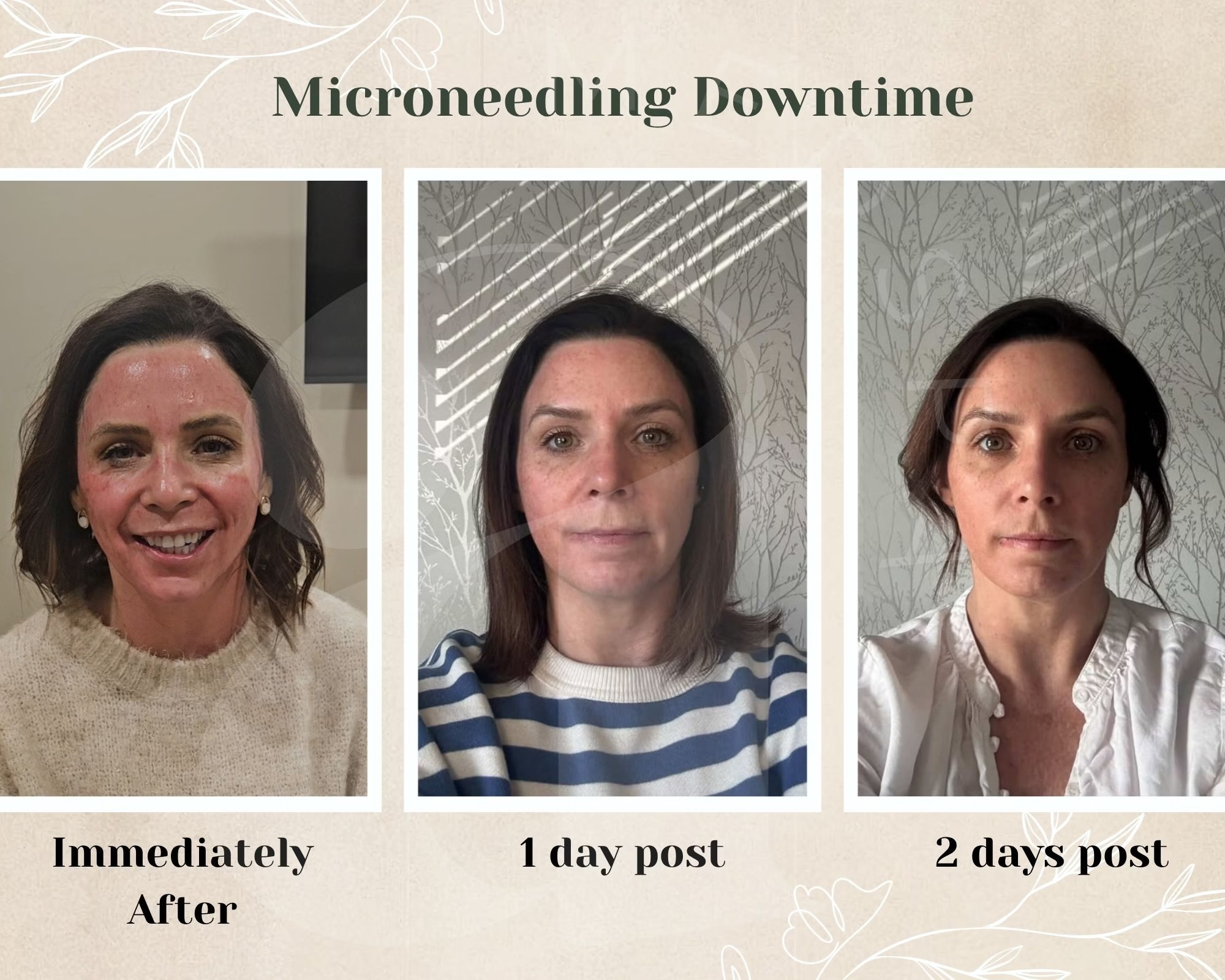
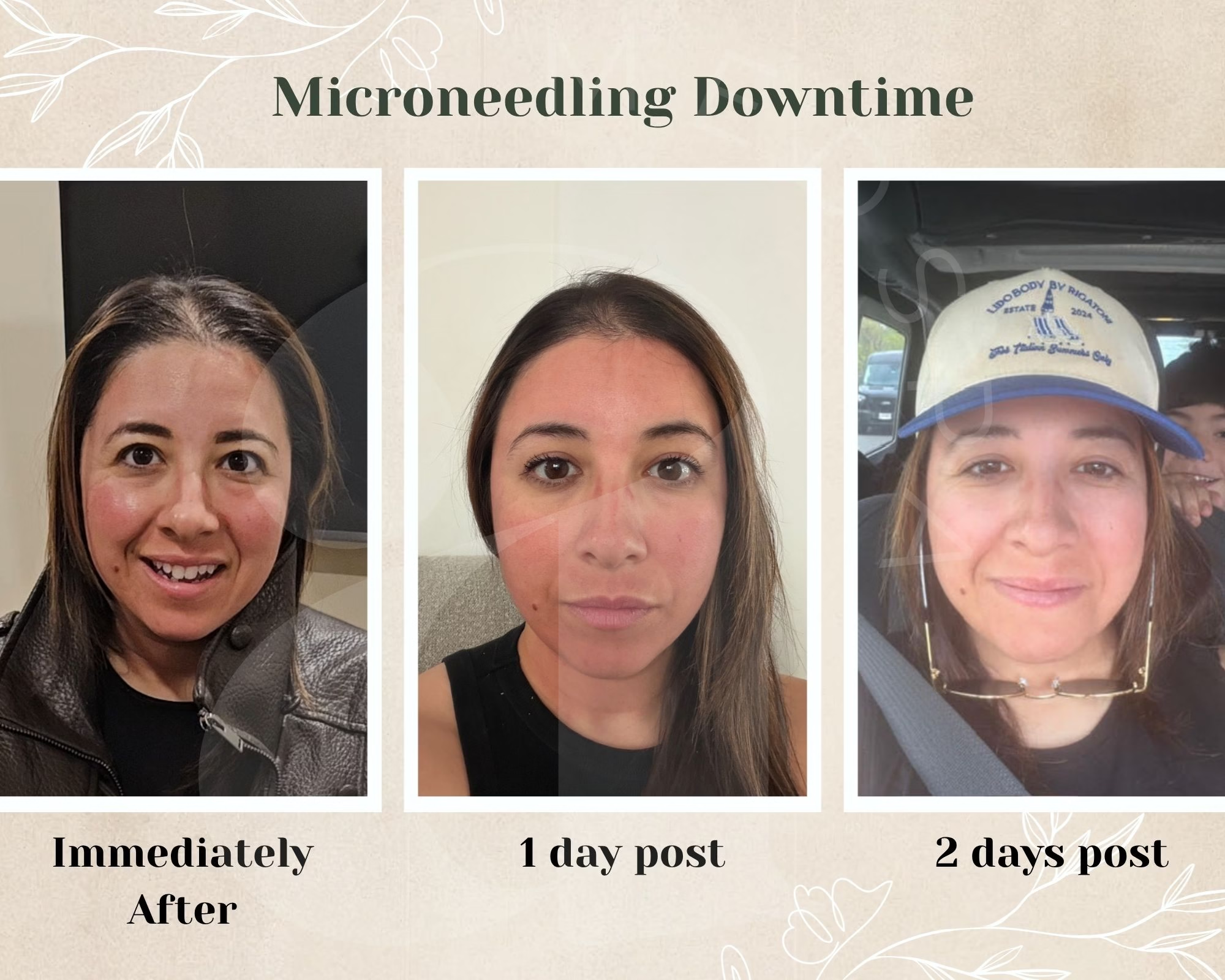
Microneedling works by creating controlled micro-injuries in the skin, which stimulates repair and collagen remodeling over time. It can be very helpful for fine lines, texture, pores, acne scarring, and overall skin quality.
Downtime is usually moderate. Most patients should expect about 2 to 4 days of redness, sensitivity, and a sunburn-like look, with some dryness or roughness for a little longer depending on the treatment depth. RF microneedling often pushes that further, with downtime more in the range of 3 to 7 days because the added heat can create more swelling and inflammation.
RF microneedling also deserves an important safety note. While it can be an effective treatment in some settings, there is growing concern in aesthetic medicine about the potential for unintended facial fat loss (not the “good” kind of fat loss) when energy-based devices are used too aggressively or in the wrong patient. That’s one reason Atrium does not offer RF microneedling. Safety and tissue preservation matter just as much as visible improvement, and not every technology fits every practice.
Invasive Plastic Surgery: The Most Downtime, The Most Structural Change
At the far end of the spectrum is invasive plastic surgery. If someone has significant laxity, tissue descent, or more advanced structural aging, surgery may be the only option that can truly correct the issue in a meaningful way.
Of course, surgery often comes with the most downtime. Depending on the procedure, recovery may be measured in weeks rather than days, with bruising, swelling, and healing extending well beyond the initial recovery window. But that doesn’t make surgery “better” than everything else — it simply means it solves a different level of problem. For the right patient, that tradeoff can absolutely be worth it.
Combination Treatment
In real life, the best aesthetic outcomes often come from combination treatment. Neurotoxin may soften movement-related lines, fillers or Sculptra may address volume loss, and peels, lasers, or microneedling may improve the skin itself. That’s one reason no single treatment is magic: facial aging doesn’t happen in just one way.
The good news is that you don’t have to figure that out on your own. A thoughtful treatment plan should take into account your goals, your timeline, your tolerance for downtime, and the kind of result you actually want. To build a personalized plan that fits your face and your lifestyle, book a consultation at Atrium to go over your all your options.
Written by Atrium Medspa Editorial Team & medically reviewed for accuracy by Michael Klein, MD, FACS. This content is intended solely for general education and should not be interpreted as medical advice or a recommendation for any specific treatment, medication, or procedure. No physician-patient relationship is created by your use of this content. Healthcare decisions should be made in consultation with a qualified licensed clinician who can evaluate your individual history, symptoms, risks, and goals. If you are experiencing a medical emergency, call 911 or seek immediate emergency care.