



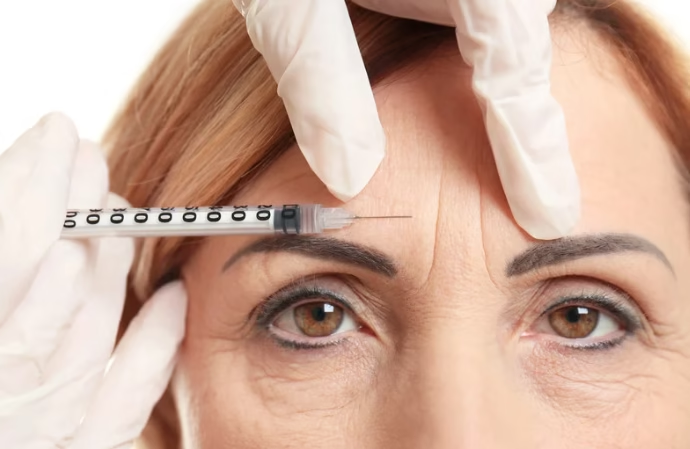
Botox, Dysport, and Jeuveau: Which One is Right for Me?
AUGUST 4, 2026 || If you’re considering a neuromodulator treatment, the good news is that Botox, Dysport, and Jeuveau all work in the same general way: they temporarily relax the muscles that create expression lines. The differences are in their history, formulation, onset, spread, and how they tend to behave in real-world use.
Botox: the tried-and-true
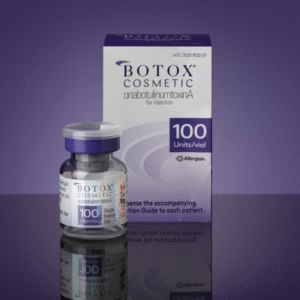
Botox is the original name most people know, and for good reason: it has the longest history, the broadest name recognition, and the most extensive track record in both cosmetic and medical use. Botulinum toxin was first described in ophthalmology in 1980, and Botox later became the dominant brand as its aesthetic applications expanded. It remains the benchmark many patients and injectors compare everything else against.
One of Botox’s biggest strengths is predictability: it’s often favored when precision matters, especially in smaller treatment zones where you want a controlled, localized effect. Botox also has the widest range of FDA-approved uses among neuromodulators, which adds to its reputation for versatility and confidence.
For many patients, Botox is the default choice. If someone wants a familiar product with a long history of use, Botox is often the first option to consider.
Dysport: more spread, for a more even look
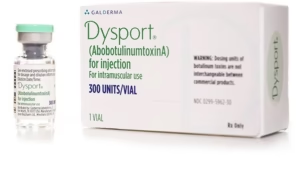
Dysport is also a botulinum toxin type A product, but it tends to have a slightly different feel in practice. It is often described as spreading a bit more easily than Botox, which can be helpful in larger areas like the forehead where a softer, more blended result may be desirable.
Many patients like Dysport because it may start working a little faster than Botox. Some sources describe visible improvement in as little as 2 to 3 days, though full results still take time and individual response varies. Like the other neuromodulators, its typical duration is around 3 to 4 months, though this can differ from person to person.
A practical issue with Dysport is dosing. Units are not interchangeable with Botox, and Dysport generally requires more units to achieve a comparable effect because the products are measured differently. That does not mean it is weaker; it simply reflects a different unit scale and formulation.
Dysport can be a good fit for patients who want quick onset, broader coverage, or a softer distribution pattern in treatment areas that benefit from diffusion.
Jeuveau: new kid on the block
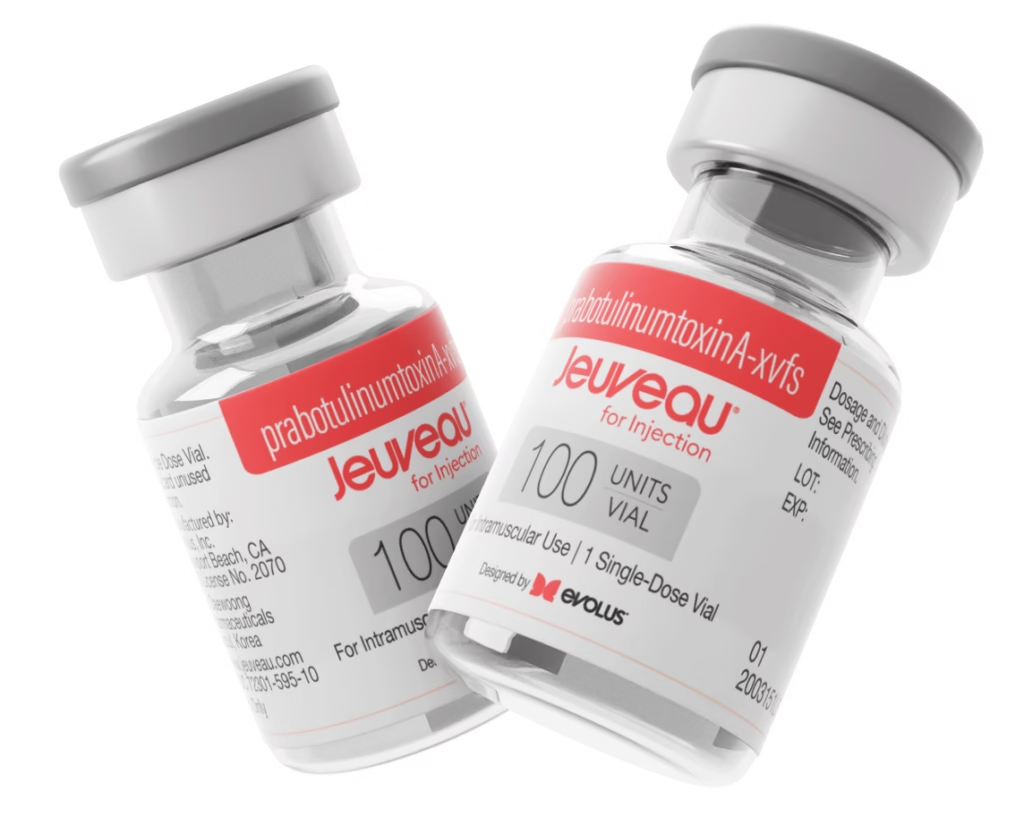
Jeuveau is the newest of the three and was developed specifically for aesthetic use, which is why it is often nicknamed “Newtox.” Compared with Botox and Dysport, Jeuveau has a shorter history, but it was designed with cosmetic patients in mind from the start.
One of Jeuveau’s main selling points is that it is positioned as a modern, aesthetic-first neuromodulator. It’s commonly used for glabellar lines, and many providers also use it in other expression-line areas depending on patient anatomy and injector preference.
In practice, Jeuveau often competes on feel, branding, and value. Some patients appreciate it as a newer alternative that may work quickly and offer a cost-conscious option, while injectors may like it for patients who specifically want a product developed for aesthetics rather than broader medical indications.
How to decide
The best choice usually depends less on the brand name and more on your goals, anatomy, and injector’s experience. Botox is often the best fit for patients who want the most established, precise, and familiar option; Dysport may be attractive for quicker onset or broader areas; and Jeuveau may appeal to patients who want a newer, cosmetic-focused product.
The injector matters just as much as the product. Any of these toxins can look mediocre if placed poorly, while a skilled injector can make any of these options look excellent.
Written by Atrium Medspa Editorial Team & medically reviewed for accuracy by Michael Klein, MD, FACS. This content is intended solely for general education and should not be interpreted as medical advice or a recommendation for any specific treatment, medication, or procedure. No physician-patient relationship is created by your use of this content. Healthcare decisions should be made in consultation with a qualified licensed clinician who can evaluate your individual history, symptoms, risks, and goals. If you are experiencing a medical emergency, call 911 or seek immediate emergency care.