
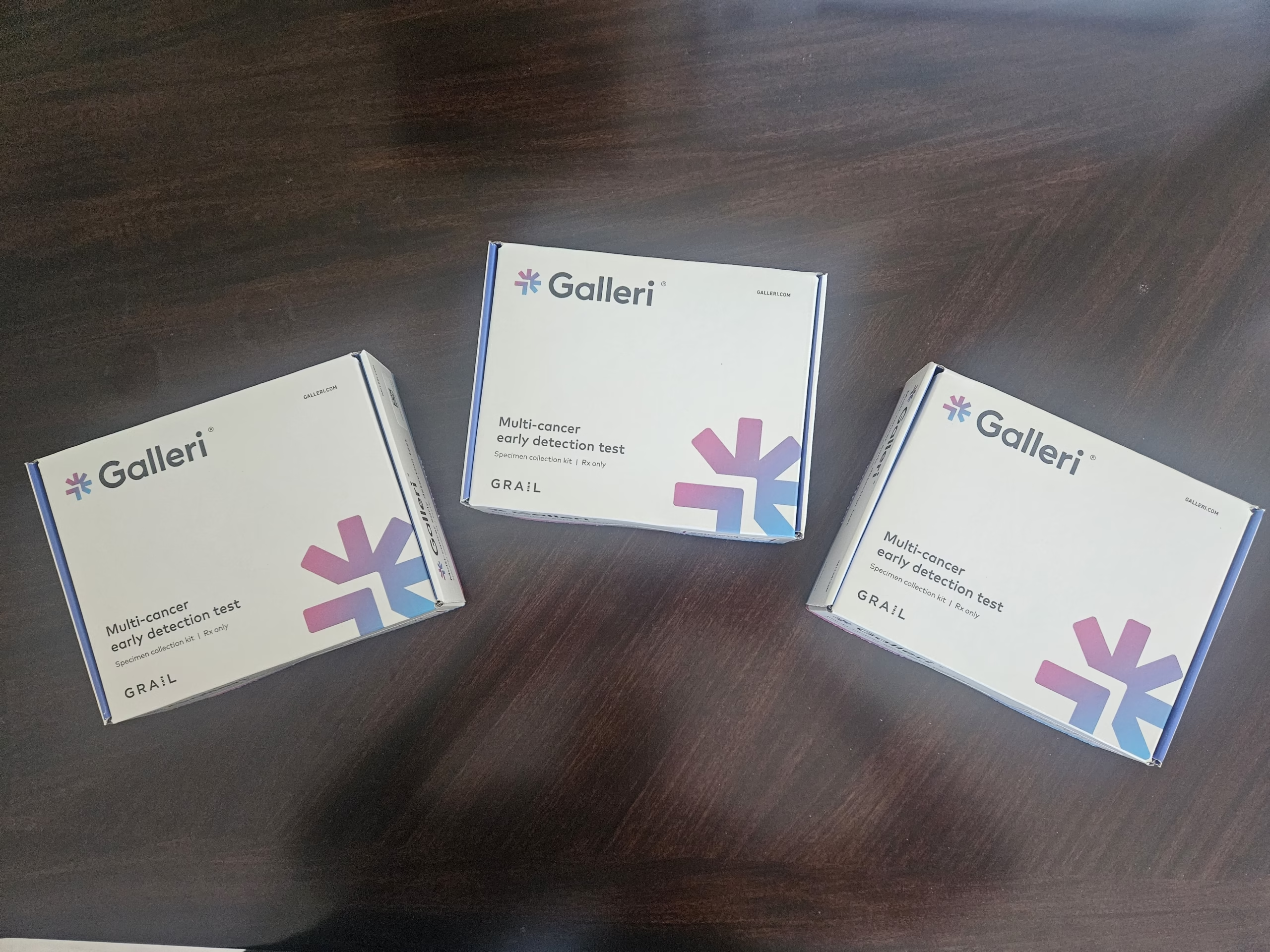
Galleri® Advanced Cancer Screening
Extra peace of mind, especially for those cancers without routine screening tests.
Atrium Medspa is a physician‑led, quality-focused luxury medical spa in Upper Saddle River, NJ, serving clients from Ridgewood, Allendale, Ramsey, and Bergen and Rockland Counties. Explore our entire catalog of services here.
Galleri® Advanced Cancer Screening at Atrium Medspa
Galleri® is a multi-cancer early detection blood test that screens for 50+ cancers, including many cancers that do not have routine screening tests today. It is designed to complement, not replace, standard cancer screenings that your healthcare provider already recommends, such as mammograms, colon cancer screening, cervical screening, or lung cancer screening for eligible patients.
At Atrium, we offer Galleri testing as part of a broader wellness-focused approach to preventive care. We also offer other advanced blood testing options, including CardioIQ, for patients who want a deeper look at their health risks beyond standard labs.
What is the Galleri test?
Galleri is a multi-cancer early detection blood test (sometimes known as a “liquid biopsy”). It looks for DNA fragments in the blood that may be shed by cancer cells and can screen for cancer signals linked to more than 50 types of cancer.
In simple terms, the test looks for a biological “fingerprint” that may suggest cancer is present somewhere in the body. If a signal is found, the result can also predict where that signal may have started, which can help guide the next step in medical follow-up.
Why people consider Galleri
- It uses a simple blood draw.
- It screens for more than 50 cancers with one test.
- It may help identify cancers that do not have routine screening tests today.
- It is designed to be used alongside routine screening, not instead of it.
Which types of cancers goes Galleri detect?
Examples of cancers Galleri can detect include:
- Pancreatic cancer.
- Liver cancer.
- Bile duct cancer.
- Ovarian cancer.
- Lung cancer.
- Esophageal cancer.
- Colorectal cancer.
- Bladder cancer.
- Head and neck cancers.
- Stomach cancer.
- Lymphoma.
- Leukemia.
- Breast cancer.
- Cervical cancer.
- Uterine cancer.
- Kidney cancer.
- Melanoma.
- Anal cancer.
- Urothelial tract cancers.
- Gallbladder cancer.
- Plasma cell neoplasms.
Who may be a good fit?
Galleri is often discussed with adults who want a more proactive screening strategy, especially people age 50 and older or those who feel they may have higher cancer risk based on age, family history, or personal health factors. Galleri’s public materials also highlight use in adults at elevated risk and note annual testing as an option to discuss with a healthcare provider.
The right candidate should be determined through an informed conversation, because this is a screening tool, not a diagnosis. A provider should help decide whether the test makes sense based on your age, health history, current symptoms, and standard screening schedule.
What the results can mean
There are two main possible results: “No Cancer Signal Detected” or “Cancer Signal Detected.” A “No Cancer Signal Detected” result does not completely rule out cancer, and a “Cancer Signal Detected” result does not mean a person definitely has cancer.
Galleri states that nearly 99% of people screen negative, while about 1% of people ages 50 to 79 are expected to receive a “Cancer Signal Detected” result. Galleri also notes that among people with a detected signal who go on to diagnostic workup, around 62% are expected to have a confirmed cancer diagnosis after follow-up testing.
If a cancer signal is detected, additional diagnostic testing is needed. That may include imaging, lab work, or specialist evaluation ordered by a healthcare provider.
Important limitations to understand
- Galleri is a screening test, not a diagnostic test.
- It does not detect all cancers.
- Not all cancers shed enough DNA into the blood to be found.
- False positive and false negative results can happen.
- It should be used in addition to routine screenings recommended by your healthcare provider.
Galleri and other advanced blood testing at Atrium Medspa
At Atrium Medspa, we offer Galleri advanced cancer screening for patients who want a proactive conversation about early detection. We also offer advanced blood testing options such as CardioIQ, which can provide a more detailed cardiovascular risk picture than a standard lipid panel by including markers such as lipoprotein fractionation and apolipoprotein B in certain panels.
For many patients, the value is having a more complete view of health in one place. Whether your priority is cancer screening, heart health, or a broader wellness plan, our team can help you decide which lab options are worth considering.
What to expect at your visit
- We review your goals, health background, and whether Galleri is appropriate as part of your screening strategy.
- Your blood draw is performed in-office.
- Your results are reviewed when available, and any needed next steps are discussed.
- If you are also interested in cardiovascular testing, we can discuss advanced labs such as CardioIQ during the same planning process.
Schedule at Atrium Medspa
Atrium Medspa in Upper Saddle River offers Galleri advanced cancer screening along with other advanced blood tests, including CardioIQ, for patients who want a more preventive and personalized approach to health.
To schedule, contact Atrium Medspa to book a consultation and discuss whether Galleri or other advanced lab testing is right for you.
Frequently Asked Questions
No. Galleri is a screening test, not a diagnostic test. If the test finds a cancer signal, follow-up testing is needed to confirm whether cancer is actually present.
No. Galleri should be used alongside standard screenings like mammograms, colonoscopies, Pap tests, and other screenings recommended by your healthcare provider.
Galleri can screen for signals associated with many cancers, including pancreatic, ovarian, lung, colorectal, liver, bile duct, bladder, esophageal, and others.
Galleri may be helpful for people who want a more proactive approach to health, especially because many of the cancers it screens for do not have routine screening tests today.
Galleri testing is typically not covered by insurance, but it may be FSA/HSA eligible, depending on your plan.